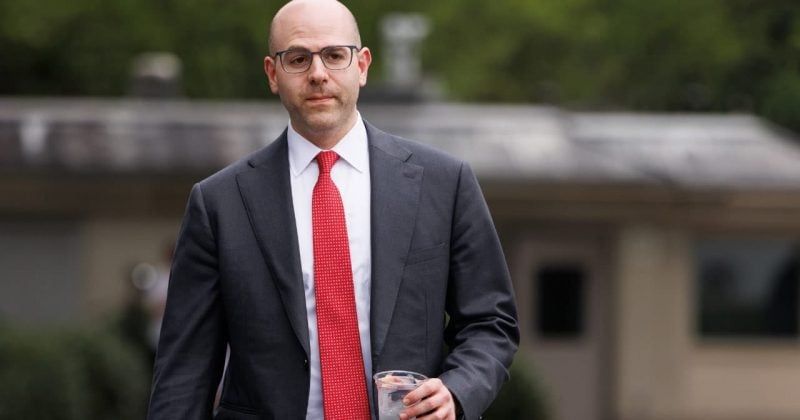
Stephen Miran has resigned from the Federal Reserve Board of Governors, stepping aside to make room for Kevin Warsh, who has been confirmed by the Senate as the next chair of the world’s most powerful central bank.
Miran’s resignation emphasizes reducing the Fed’s balance sheet and cutting regulations, consistent with the broader deregulatory push that has characterized recent economic policy from the White House. His resignation takes effect before Warsh is officially sworn in.
Who is Kevin Warsh, and why does this matter
Kevin Warsh previously served on the Board of Governors during the 2008 financial crisis, where he developed a reputation as one of the more hawkish voices in the room. He was skeptical of the unconventional monetary tools, like quantitative easing, that the Fed deployed to stabilize the economy during the Great Recession.
One important detail in this transition: Jerome Powell isn’t leaving the building. Powell will remain a Fed governor until 2028, even after Warsh assumes the chair. That creates an unusual dynamic where the former chair sits on the same board as his successor, potentially as a dissenting voice on policy decisions.
The policy signals embedded in Miran’s exit
The balance sheet question is particularly consequential. After years of quantitative easing and emergency lending programs, the Fed’s balance sheet ballooned to unprecedented levels. Reducing it, a process sometimes called quantitative tightening, effectively removes liquidity from the financial system. Warsh has historically been uncomfortable with the Fed holding trillions of dollars in Treasury securities and mortgage-backed bonds, viewing it as a market distortion rather than a stabilizing force.
On the regulatory side, a Fed that takes a lighter touch on bank supervision and financial regulation could benefit traditional financial institutions, but it also raises questions about systemic risk monitoring, particularly in fast-growing sectors that operate at the edges of the regulatory perimeter.
What this means for investors
For crypto specifically, a deregulatory Fed could mean less scrutiny on bank partnerships with digital asset firms, something the industry has been desperate for.
A former chair sitting on the board with the authority to dissent publicly adds an unpredictable variable. Powell’s views on monetary policy have historically been more pragmatic and data-dependent than Warsh’s more ideological approach.