Three months ago, Nvidia took the wraps off its RTX Spark “superchip” and a handful of future laptops that would use it. It felt like a consequential moment in the history of the PC, despite all the questions that remained.
And now, as announced at the IFA 2026 tech show in Berlin, we’ve had our first hands-on look at one of these laptops, as well as some announcements around RTX Spark-powered mini desktop PCs. Demand for running agentic AI workflows like OpenClaw locally on your computer keeps rising, and these new PCs look like they are designed specifically to feed it.
Nvidia Alternatives to the MacBook Pro

Photograph: Les Shu

Photograph: Les Shu
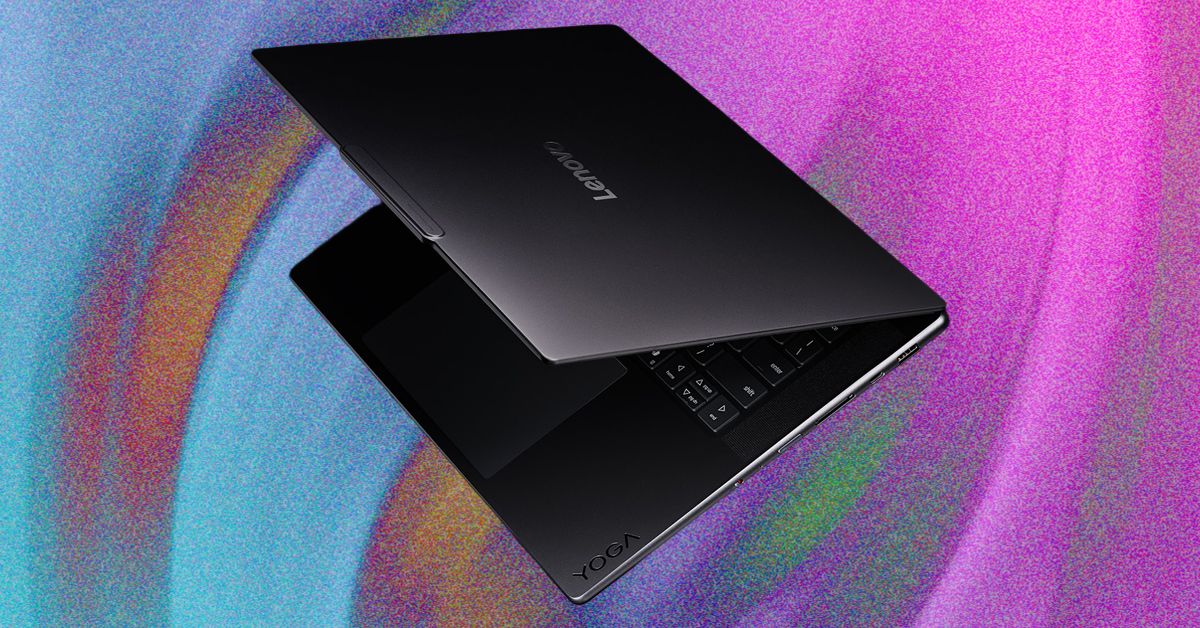
The laptop in question is the Lenovo Yoga 9n 2-in-1, a 16-inch laptop with a 360-degree hinge. As I assumed it would, this thing looks incredibly premium, aiming to be a MacBook Pro competitor in every aspect. The OLED touch display has a sharp 2880 x 1800 resolution and a 120-Hz refresh rate. The whole chassis is surrounded by rounded metallic edges and some very thin display bezels. Other high-end features we don’t typically see include a six-speaker sound system and a 9.2-megapixel webcam.
But here’s the important bit: It’s 0.69 inches thick, just 0.03 inches shy of the 16-inch MacBook Pro. That’s possible thanks to Nvidia’s Arm-based chip under the hood, which combines a Grace CPU with “up to 20 cores” and a Blackwell RTX GPU with “up to 6,144 cores.” The CPU, GPU, and memory are packaged together into a single system-on-a-chip (SoC), sharing more in common with Apple silicon than a conventional Windows laptop. Based purely on core count alone, that would theoretically put the integrated GPU capability of this chip somewhere between an RTX 5070 Ti and an RTX 5080 as found on laptops available today. Those specs also indicate that lower-powered configurations will be sold, though we don’t know how broad the performance range will be. There was no mention of battery-life claims, though presumably one benefit of using an Arm-based SoC (rather than a discrete GPU) is greater efficiency and, thus, better battery life.

Photograph: Les Shu