Key Takeaways
- Social media’s latest viral punchline carries a far more troubling backstory.
- A sophisticated operation exploited weaknesses far removed from blockchain cryptography.
- The difference between stolen wealth and spendable money remains a crucial mystery.
Kim Jong Un Gets the Last Laugh as Crypto’s Biggest Heist Becomes Meme Gold
Apparently, $6.36 billion buys plenty of laughs, particularly when the suspected beneficiaries reside in one of the world’s most heavily sanctioned countries. Following Binance’s Oct. 29 security catastrophe, social media users began depicting Kim Jong Un grinning like a lottery winner, inspecting his imaginary exchange balance and enjoying the finer things in life.
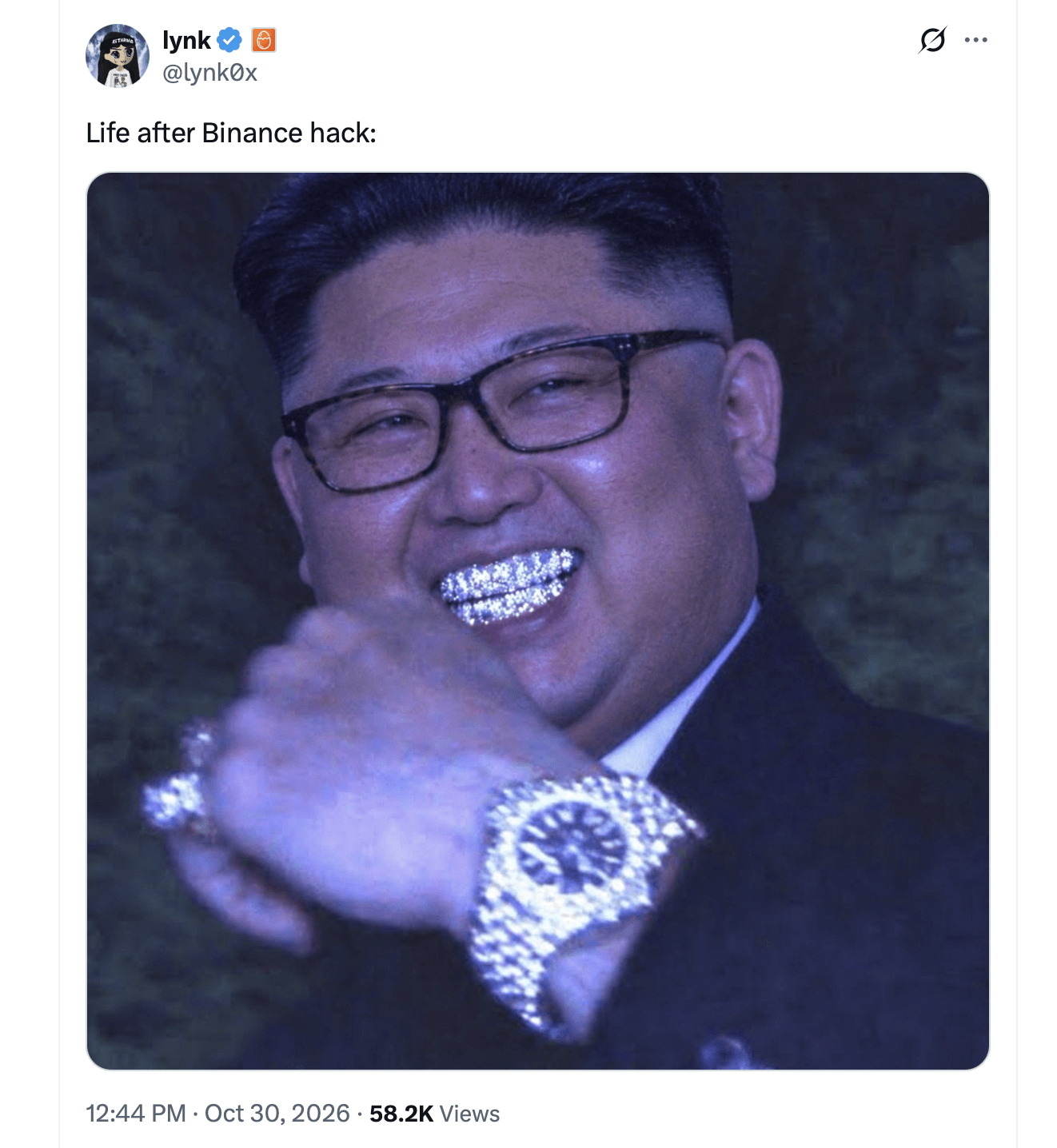
The jokes arrived as blockchain investigators pointed toward North Korea’s notorious Tradertraitor operation, associated with the broader Lazarus Group. But behind the digitally embellished dictator sits a far less amusing reality: a cybercrime enterprise whose suspected cryptocurrency thefts now total approximately $13.3 billion.
Crypto Twitter Gives Pyongyang the Hollywood Treatment
One viral X post imagined Kim celebrating after supposedly increasing his country’s gross domestic product by $6 billion. Another portrayed him congratulating the alleged Binance hacker, with the added punchline that the operative wouldn’t personally receive a cent. The festivities extended to luxury-themed edits, impersonator accounts thanking cryptocurrency investors, and Halloween jokes about a particularly expensive trick-or-treat.
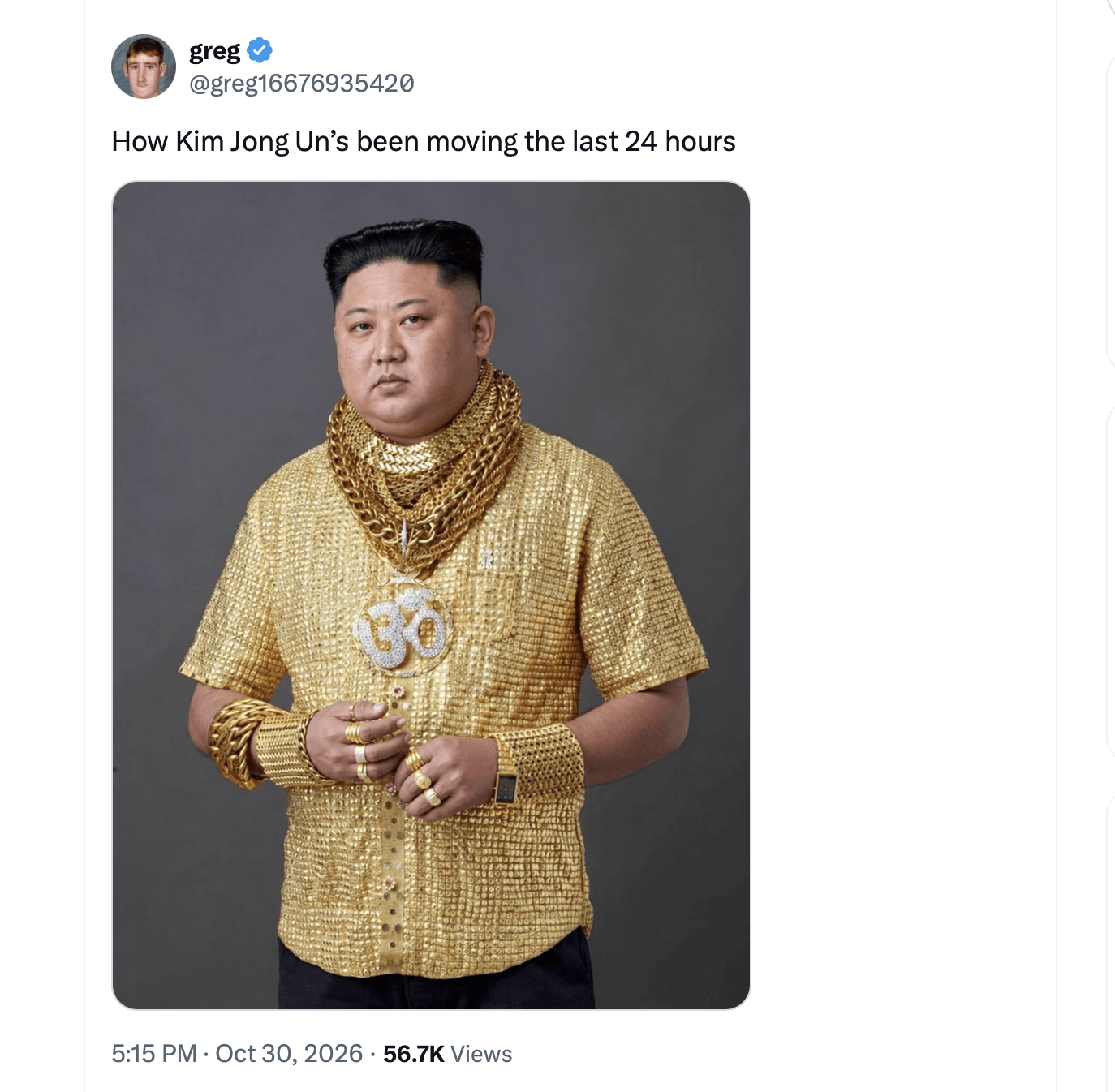
It’s gallows humor with a geopolitical twist. The memes ridicule the apparent failure of sophisticated financial defenses against operatives allegedly working for an isolated authoritarian government. Their popularity also revives an older internet tradition of joking that stolen digital assets finance North Korean missile launches.
A Compromised Laptop Opens a Multibillion-Dollar Door
The alleged attackers reportedly exploited access originating from a Binance engineer’s infected computer, reaching systems authorized to approve withdrawals. Within approximately 20 minutes, assets moved across nearly a dozen blockchains, including 18,270 BTC and substantial quantities of ether, XRP, and stablecoins. Investigators identified advance preparations involving transaction permissions and specialized Ethereum functionality that helped execute the operation.
Binance has pledged to absorb the financial damage, while emergency interventions by token issuers and blockchain administrators reportedly immobilized between $2.7 billion and $3 billion. The company maintained that customer assets were protected. No U.S. government agency had publicly assigned responsibility for the incident as of Oct. 31, leaving the private-sector attribution distinct from an official finding.
Lazarus Group’s Alleged $14B Fortune Has Been Decades in the Making
The broader historical accounting encompasses 296 suspected North Korea-linked cryptocurrency thefts, although individual cases carry different levels of evidentiary support. The progression is striking. A $275 million Kucoin incident in 2020 preceded the $620 million Ronin Bridge exploitation in 2022. DMM Bitcoin lost approximately $308 million in 2024, followed by Bybit’s $1.46 billion catastrophe in February 2025.
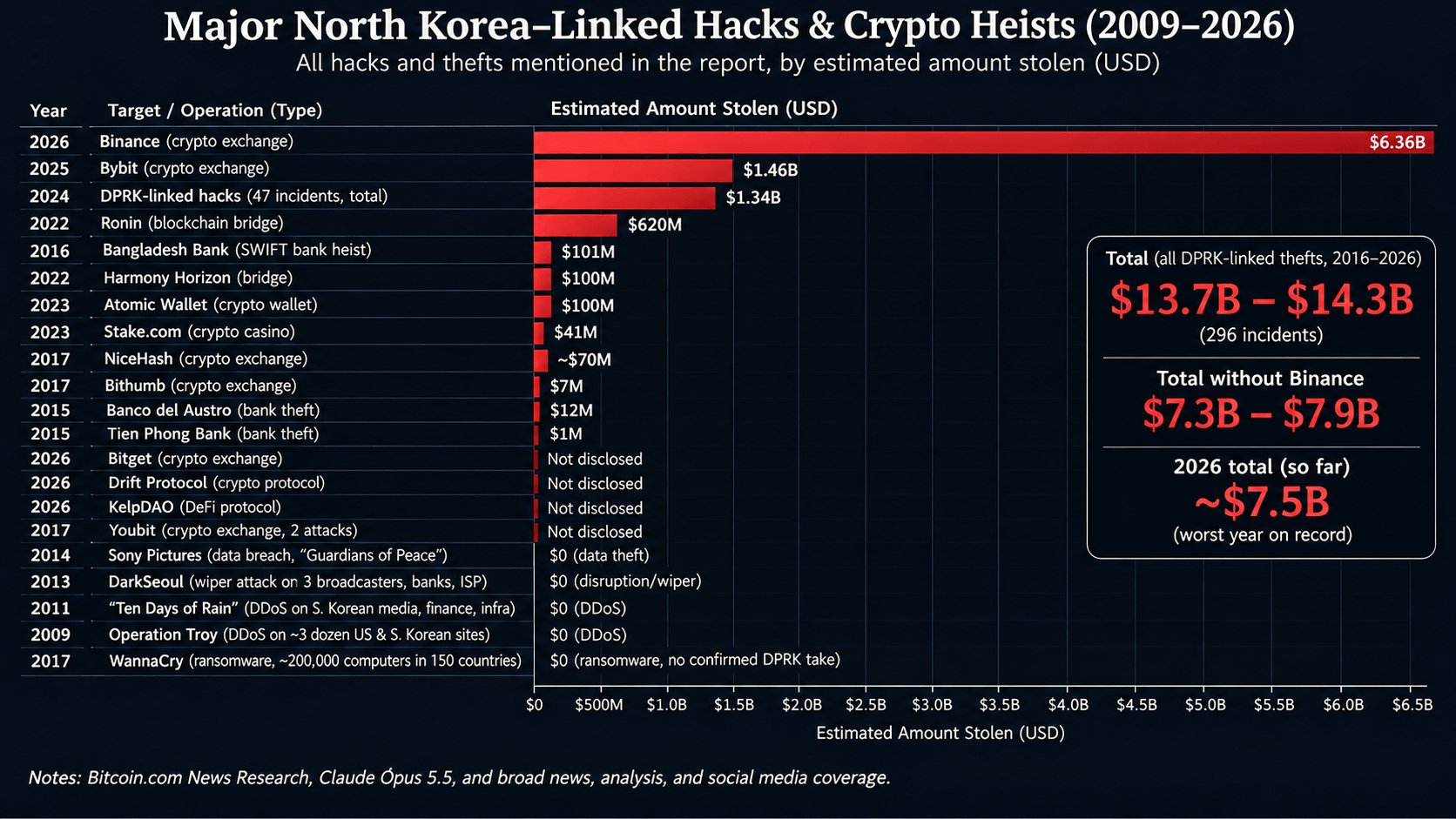
Federal authorities attributed the Ronin, DMM Bitcoin, and Bybit incidents to North Korean actors. Other cases remain supported primarily by blockchain intelligence assessments rather than government findings. The organization itself is no ordinary hacking outfit. Lazarus functions as an umbrella designation encompassing overlapping North Korean cyber operations, including financially motivated units such as Bluenoroff and Tradertraitor.
The Billion-Dollar Question Nobody Can Answer With a Meme
The techniques have changed considerably since the hacking syndicate‘s earlier banking exploits. Fake recruitment offers, malicious software, compromised transaction interfaces and deceptive authorization requests now feature prominently in investigations. After an intrusion, stolen assets can pass through intermediary wallets, token swaps and laundering services designed to complicate tracing and recovery.
Crucially, historical theft valuations do not establish how much money reached the North Korean government. They include assets later recovered, immobilized or rendered inaccessible, alongside incidents whose attribution remains disputed. That leaves the internet’s favorite image of a laughing dictator with one rather expensive missing detail: whether Pyongyang can actually spend the fortune everyone keeps joking about.