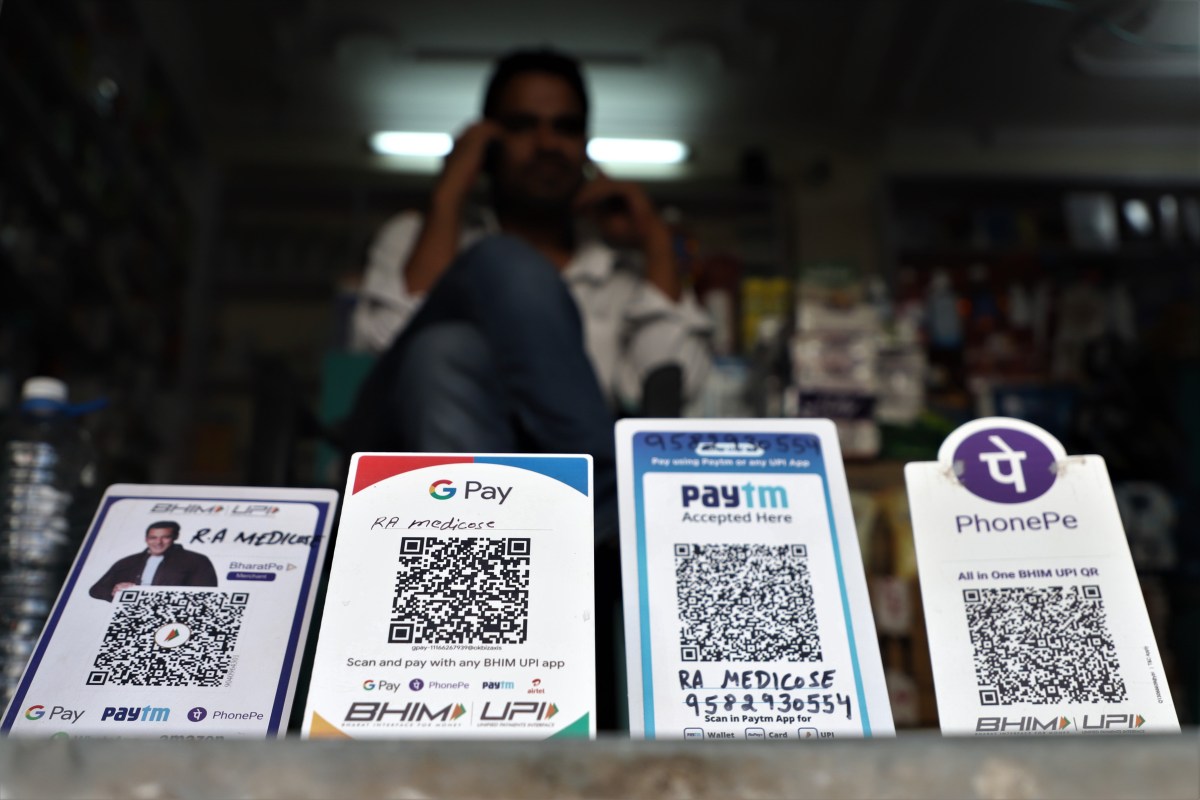
India is taking steps to reshape the business model behind its Unified Payments Interface (UPI), a widely used payments network built by the government, via new legislation that could pave the way for merchants to pay charges on some UPI transactions.
The legislation (PDF) lays the legal groundwork for a potential overhaul of India’s zero-merchant-discount-rate (MDR) regime, under which businesses have not paid fees to accept UPI payments since 2020.
The policy shift comes as UPI has become ubiquitous in India, processing a record 23.66 billion transactions worth ₹29.88 trillion (around $313.4 billion) in July alone, per the National Payments Corporation of India, the operator of UPI.
India scrapped merchant discount rates on UPI transactions in January 2020 to accelerate adoption of the payments network, which instead relied on state incentives to support its operation and development.
The proposal comes after years of argument between the finance ministry, India’s central bank, and payment companies over how to fund the fast-growing network. Banks and fintech firms have argued that the policy of keeping merchant payments free has become harder to sustain as transaction volumes and infrastructure costs climbed.
“For us to get to 90% penetration, and to take UPI global, startups, fintechs and banks will need to fund this expansion through continued investments in IT, innovation and cyber security,” Amrish Rau, chief executive of fintech firm Pine Labs, wrote on X, welcoming the move.
Rau said allowing the industry to recover part of those investments from merchants while keeping consumer and peer-to-peer payments free would put UPI on a more sustainable footing.
The legislation does not itself impose merchant fees or specify which transactions would be affected, leaving those details to be specified later.
Nonetheless, market analysts believe the legislation could mark the first step toward a significant new revenue stream for India’s payments industry. In a report published on Tuesday, Jefferies estimated that introducing merchant charges on higher-value UPI transactions could generate an additional ₹50 billion to ₹100 billion (about $525 million to $1.05 billion) in annual revenue by fiscal 2028, assuming a fee of 15–30 basis points.
Indian daily Economic Times reported last month that officials were considering limiting any merchant charges to larger merchants rather than applying them across all UPI transactions.
In a report last week, brokerage firm Bernstein wrote that such an approach would preserve UPI’s consumer-friendly model while creating a meaningful new revenue pool for banks and payment companies. The report noted that transactions above ₹2,000 (about $21) account for only about 4% of payment volumes but nearly 70% of transaction value.
The legislation will be closely watched by countries where UPI is now live, which include Singapore, the United Arab Emirates and France.
The law could be particularly significant for companies that dominate India’s digital payments market. Walmart-owned PhonePe and Alphabet’s Google Pay together account for nearly 80% of UPI transaction volumes, according to NPCI data. However, how much either company ultimately benefits will depend on how any merchant fees are distributed among banks, payment apps, and other participants in the ecosystem.
When you purchase through links in our articles, we may earn a small commission. This doesn’t affect our editorial independence.