Key Takeaways
- IMF revealed El Salvador’s Bitcoin gains were private donations, unlocking $140M in IMF funding.
- El Salvador agreed to end public Bitcoin buys, aligning treasury policy with IMF transparency rules.
- The government privatized majority control of Chivo Wallet, resolving IMF compliance concerns.
IMF Certifies El Salvador’s Bitcoin Comes From Private Funding
The mystery behind El Salvador’s continued bitcoin purchases is slowly clearing up.
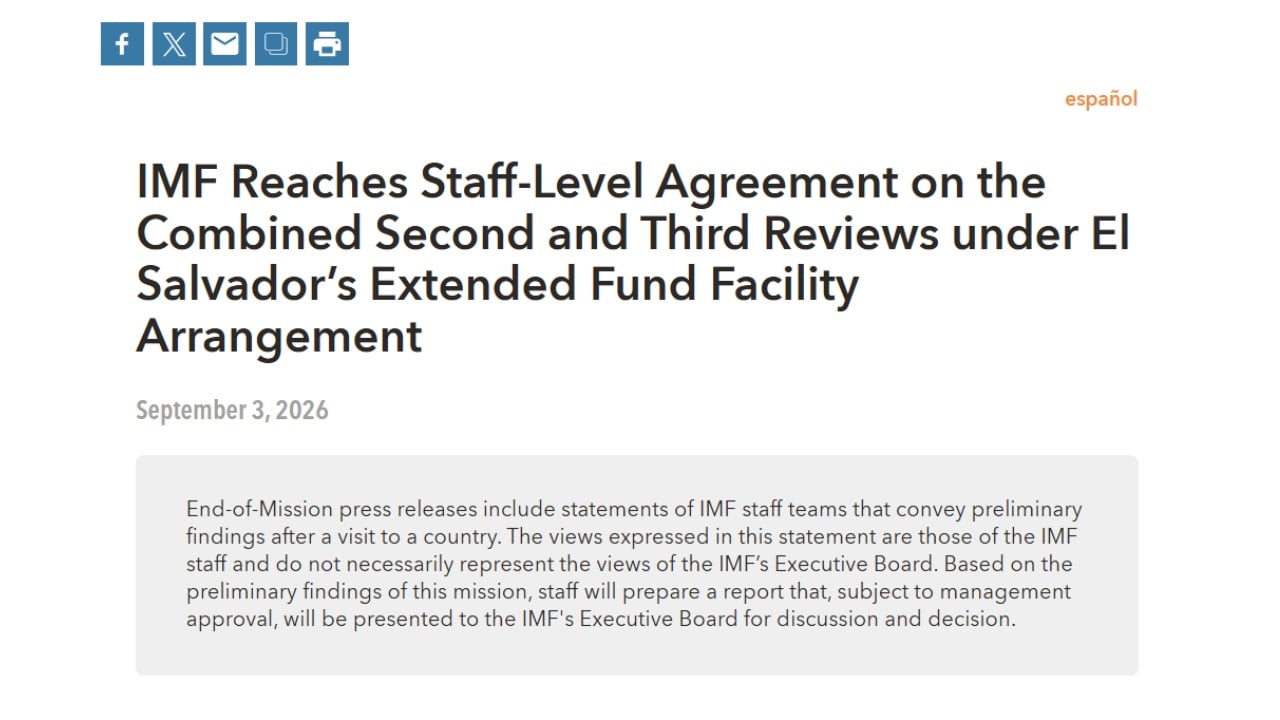
After reaching a staff-level agreement with Salvadoran authorities to release $140 million, part of a 40-month funding deal, the International Monetary Fund (IMF) clarified the government’s role in the so-called bitcoin purchases executed since this facility was officially approved on February 26, 2025.
In a press release issued on Thursday, in which the institution praised El Salvador’s results, highlighting that gross domestic product (GDP) growth would reach 4.5% in 2026, the IMF revealed that El Salvador had not purchased bitcoin, and that the recurrent additions to its treasury were part of donations made by undisclosed private parties that were not revealed.
“Documentation has been provided verifying that Bitcoin accumulation since the first review reflects private donations and that no public resources were used,” the fund stated, also highlighting that there was an understanding to modernize the current digital assets framework to manage public-sector crypto-asset holdings.
John Dennehy, founder of My First Bitcoin, a non-profit that operated in El Salvador until 2025, speculated that Tether could be behind the donations, stressing it had the resources and the motivation to do it.
Tether relocated its headquarters to El Salvador in January 2025, stressing that it would “look forward to working closely with El Salvador’s government, businesses, and communities.” Nonetheless, there has been no public acknowledgement of a donation of this size to the nation’s bitcoin reserves.
“Going forward, no further Bitcoin accumulation beyond the documented donations is expected,” the IMF pointed out.
Another contentious issue, Chivo Wallet, which had been singled out as a non-compliance element, has been solved. The fund stressed that “public participation in the e-wallet Chivo has been substantially unwound, and efforts are underway to enhance transparency of Bitcoin holdings across the various wallets.”
In addition, Chivo’s operational control and majority ownership are now in private hands, while the Salvadoran government retains a minority stake and custody of customer assets.
The IMF had stressed that El Salvador had not purchased any bitcoin since the agreement was signed, attributing additions to the nation’s Strategic Bitcoin Reserve to “consolidation of bitcoin across various government-owned wallets.”