Key Takeaways
- Coldcard fixed a seed flaw on July 31 after AI reportedly found it in 8 minutes.
- Haseeb Qureshi says $2 AI audits could favor crypto firms with deeper security budgets.
- Qureshi urged frontier AI checks on every release as flaw discovery falls to minutes.
Coldcard Flaw Could Push Crypto Firms to Test Every Release With AI
Artificial intelligence is making vulnerability discovery so cheap that security may increasingly depend on how much companies are willing to spend before attackers do.
That is the warning from Dragonfly managing partner Haseeb Qureshi after AI models reportedly rediscovered a critical weakness in Coldcard’s bitcoin wallet firmware within minutes.
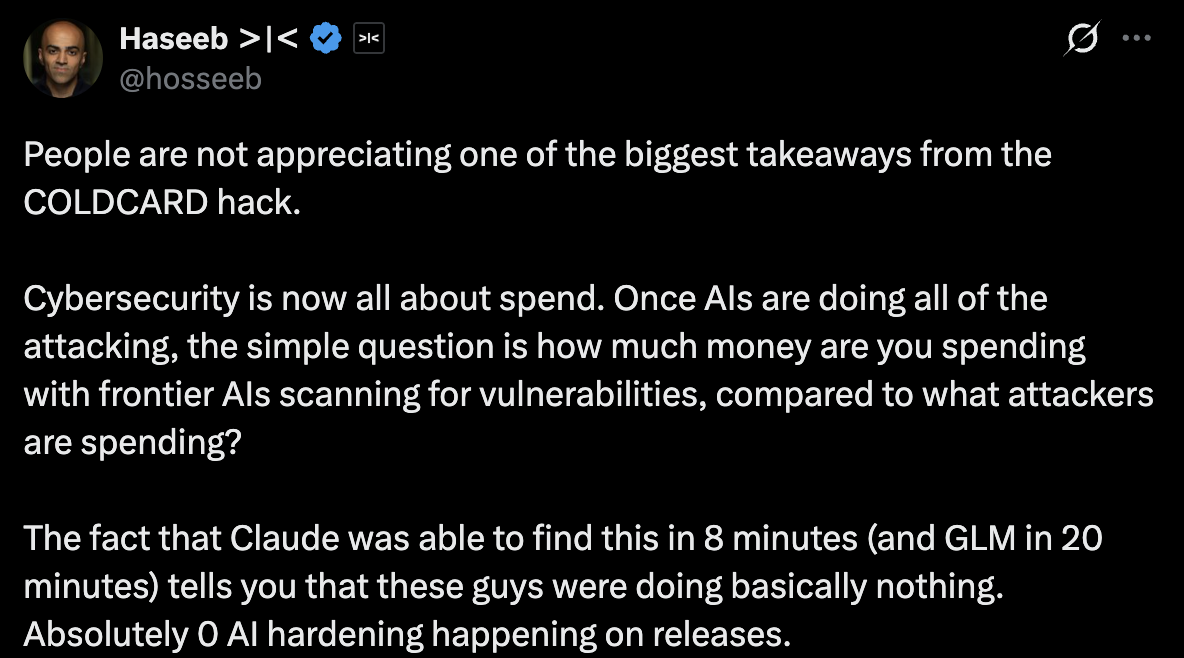
“Cybersecurity is now all about spend,” Qureshi wrote on X. The key question, he said, is how much developers invest in AI-based testing compared with potential attackers.
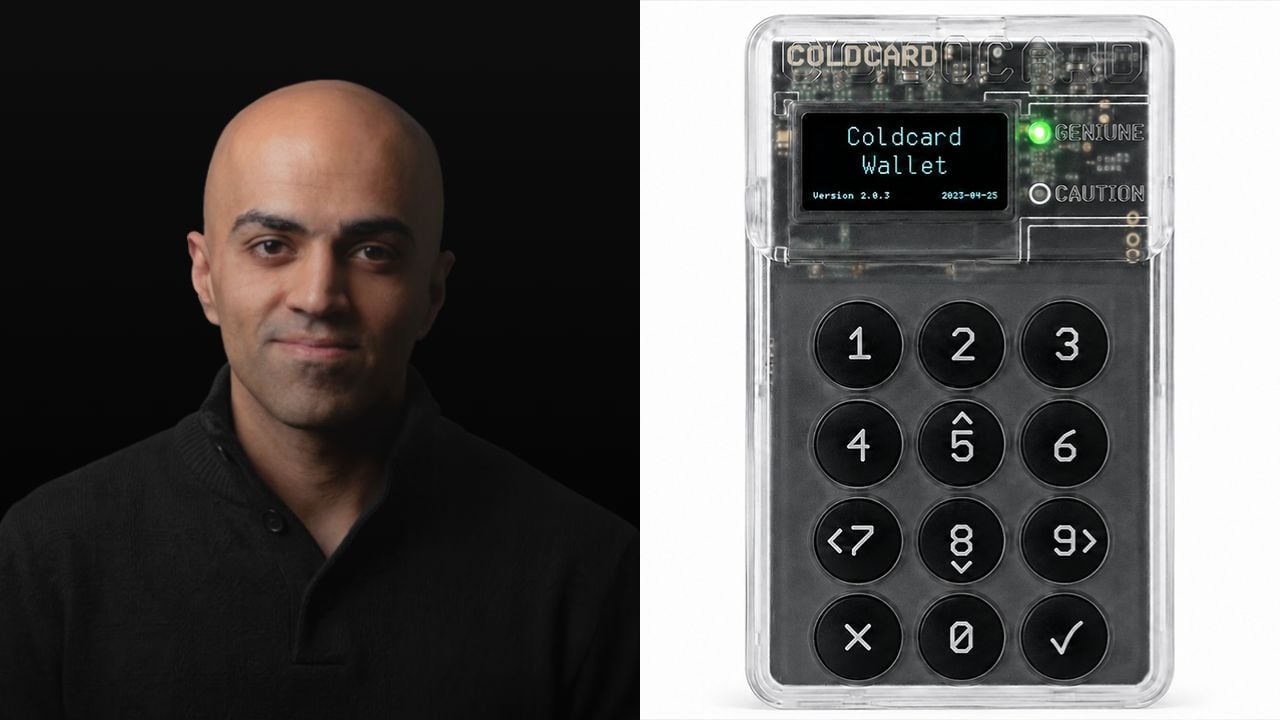
Coldcard disclosed an entropy flaw affecting seeds created with certain firmware versions. The bug caused some devices to rely on a deterministic software generator instead of the intended hardware source of randomness. Coinkite released emergency updates on July 31 and told affected users to create new seeds and move their funds. Installing new firmware alone does not repair an old seed.
Vulnerability Was Reportedly Found Within Minutes
One test reportedly found the flaw with Anthropic’s Claude Code after about eight minutes. Qureshi cautioned that the result may have been influenced by internet access, which could have exposed the model to existing information about the bug. A separate test disabled web access and used GLM 5.2. It reproduced the vulnerability in roughly 20 minutes.
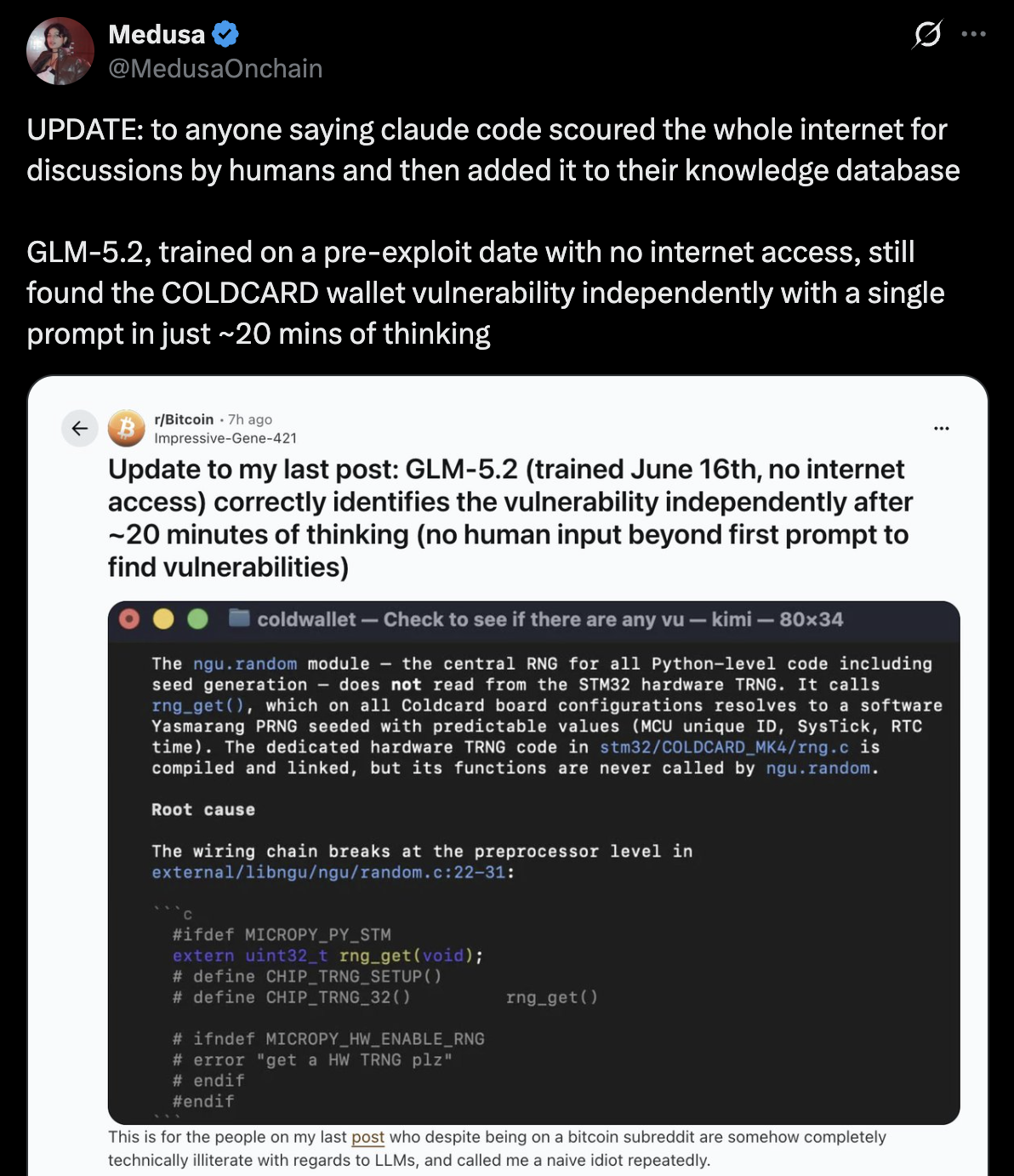
Based on the model’s input and output costs, he estimated that the audit cost about $2. “$2 of AI hardening would’ve caught this bug. There is no excuse for this,” he remarked. Qureshi proposed a new measure called Cost of Discovery, or CoD. The metric would estimate how much it costs a frontier AI model to independently reproduce a vulnerability.
Smaller Security Vendors Face Growing Pressure
The episode may have wider consequences for the hardware wallet market.
Qureshi argued that larger vendors will have an advantage because they can spend more on automated testing, audits, and release hardening. Smaller companies may struggle to match attackers who can scan code continuously at little cost.
Startups building wallets, smart contracts or other products that protect money should run AI security reviews before every release, he recommended.
Qureshi also challenged a common assumption about open-source security. Public code can protect users from malicious developers, he said, but it does not automatically protect them from attackers.
AI can serve both sides. It lowers the price of finding vulnerabilities, but it also gives developers stronger defensive tools.
“We have no choice but to adapt,” Qureshi said.