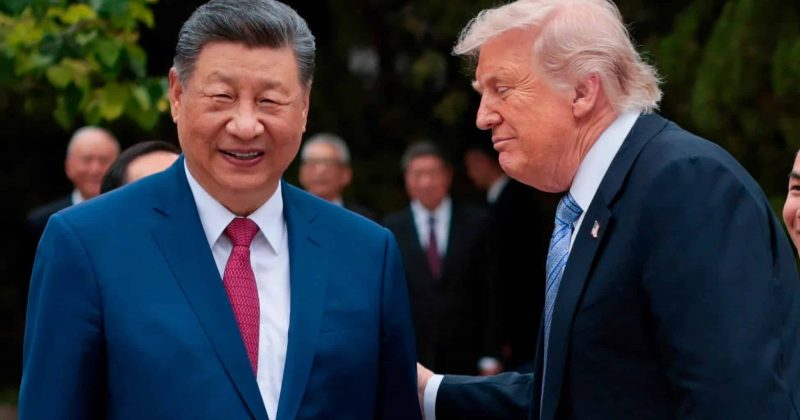
China will purchase at least $17 billion worth of US agricultural products every year, the White House announced following renewed discussions between President Trump and President Xi Jinping. The deal marks the most significant trade commitment between the two economies since tariff escalations threw bilateral commerce into chaos.
What’s actually in the deal
The $17 billion annual commitment goes beyond the usual soybean-heavy purchasing patterns that have defined Chinese agricultural imports from the US for years. The agreement is designed to diversify what China buys, expanding into pork, dairy, and beef rather than leaning on a single commodity.
The deal appears to build on an existing arrangement where China committed to purchasing 25 million metric tons of US soybeans annually from 2026 through 2028, starting with an initial 12 million metric ton tranche.
This is essentially a replay of the 2020 Phase One trade deal, which targeted an additional $32 billion in US agricultural goods over two years. That deal had mixed results, with China falling short of some purchasing benchmarks before the pandemic reshuffled global trade flows entirely.
Even with the inconsistency of the Phase One era, US agricultural exports to China still managed to reach a record $40.9 billion in 2022.
Historical context and what to watch
The Phase One deal from 2020 is the obvious comparison point. That agreement was ambitious, targeting $32 billion in additional agricultural purchases over its two-year term. China never fully met those targets, though it came closer than skeptics predicted.
The record $40.9 billion in US agricultural exports to China in 2022 shows what’s possible when trade conditions align. A $17 billion floor is well below that peak, which makes it a target China can credibly meet even in weaker demand environments.