Key Takeaways
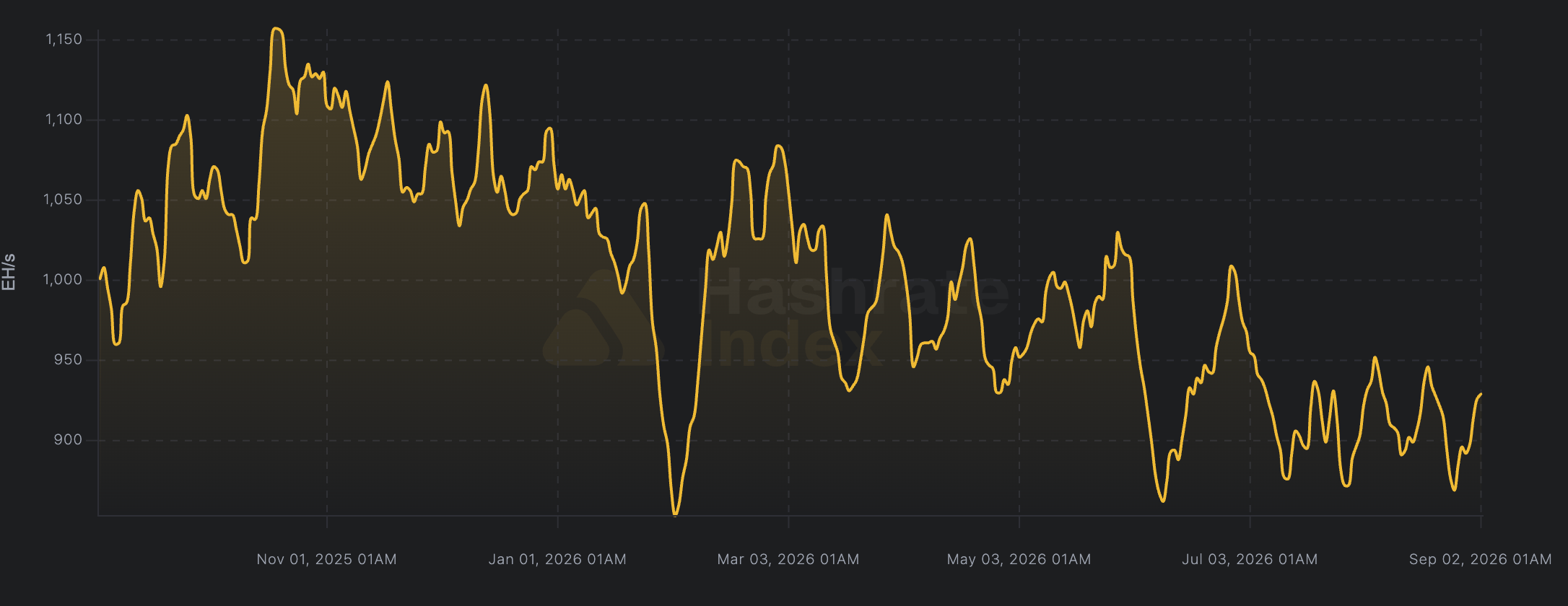
- Twenty One Capital says bitcoin entered its first hashrate bear market after peaking near 1.3 ZH/s.
- AI demand is pulling power from bitcoin mining, potentially boosting economics for miners that stay.
- Recent bitcoin miners’ transition to AI suggests the shift may deepen as miners favor long-term AI contracts over BTC.
Twenty One CEO Warns Bitcoin Hashrate Is in Its First Bear Market
Bitcoin mining may be entering territory the industry has never seen before.
Rapha Zagury, CEO of Tether-backed bitcoin treasury company Twenty One Capital, told the Bitcoin Asia 2026 conference in Hong Kong that the network is going through its first “bear market in hash rate.”
“We’re living, I think, through the first bear market in hash rate that we’ve ever seen in Bitcoin history,” Zagury said during his Aug. 28 keynote.
Bitcoin’s hashrate approached 1.3 zettahashes per second late last year before beginning a gradual decline. According to Zagury, the current stretch marks the longest period Bitcoin has spent below a hashrate record without recovering.
That matters because rising network hashrate increases competition between miners. When it falls, surviving operators can capture a larger share of bitcoin production.
This Is Not Another China Mining Ban
Zagury argued that the current downturn looks fundamentally different from 2021, when China’s crypto mining crackdown caused hashrate to collapse. Back then, mining machines largely moved to other jurisdictions and eventually came back online.
“What we’re seeing now, it’s very different,” he said. “We hit close to 1.3 zettahashes late last year, and it’s been gradually coming down.”
The change comes as mining infrastructure has gained another potential buyer: artificial intelligence.
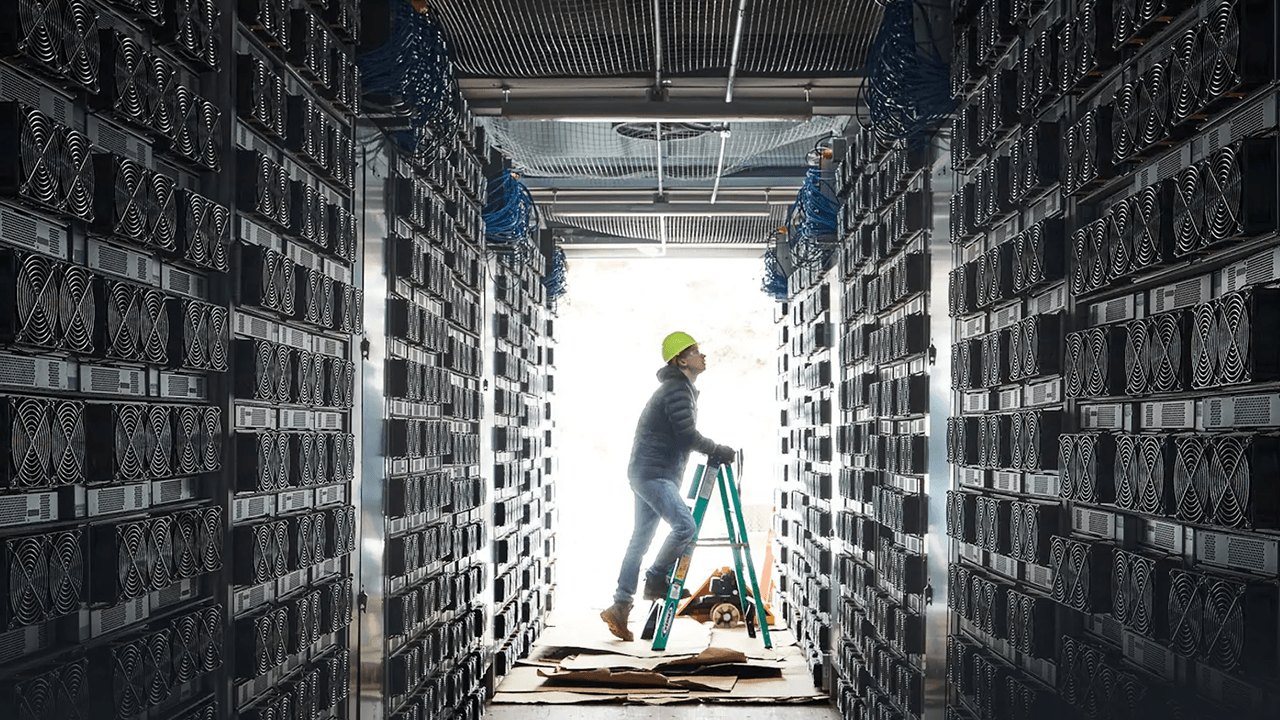
Data centers built for bitcoin can offer access to power, land and grid connections that AI and high-performance computing companies increasingly value. That gives miners an alternative to dedicating their entire infrastructure to bitcoin. Zagury said that optionality is often overlooked when investors value mining businesses.
AI Is Rewriting the Bitcoin Mining Trade
The shift Zagury described is no longer theoretical. Across the bitcoin mining industry, companies are redirecting power, land and data-center infrastructure toward AI and high-performance computing, where long-term contracts can offer more predictable returns.
Keel Infrastructure has gone furthest. The company shut down all of its U.S. bitcoin mining operations as it prepares several sites for AI and HPC workloads. Keel ended the period with about $819 million in liquidity, giving it capital to fund the transition.
Bitdeer has also moved aggressively. In August, the bitcoin miner signed a 16-year AI infrastructure agreement worth about $4.7 billion for 121 megawatts of computing capacity at its Tydal campus in Norway. The contract could reach roughly $8 billion if an extension is exercised.
Hut 8, meanwhile, secured a $9.8 billion, 15-year AI infrastructure lease covering 352 megawatts at its Beacon Point campus in Texas. Its broader contracted AI portfolio now spans 949 megawatts.
Those deals give weight to Zagury’s warning that large public miners are increasingly reconsidering pure-play Bitcoin mining. “If you look at the public mining companies out there, there really isn’t anybody staying the course to mine bitcoin at scale,” Zagury said.
For miners that remain committed, however, shrinking competition could be an advantage. Zagury argued that operators that remain true to bitcoin mining naturally gain a larger share of the network as competing hashrate disappears.
The result is an unusual tension for the crypto industry: AI may be pulling infrastructure away from bitcoin, while simultaneously improving the economics for miners willing to stay.