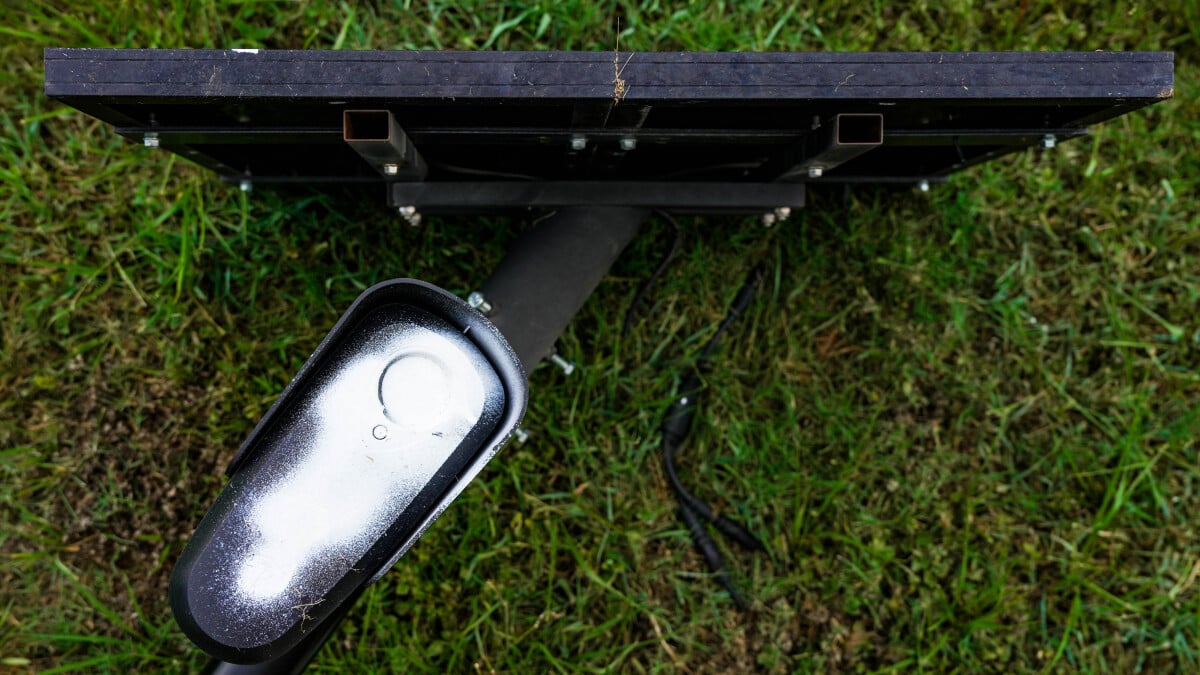
Flock cameras are supposed to help police track cars. In Winona, Minnesota, police are now trying to track down the cameras themselves.
All eight license plate readers operated by the Winona Police Department disappeared sometime between July 29 and Aug. 1, according to police. Officers discovered the thefts after one noticed that the system had not recorded any recent activity. When police checked the four locations where the devices had been installed, they found the mounting poles cut near the base and discarded in nearby weeds. The camera equipment was gone.
Two flock cameras had been positioned at each of the four locations along highways entering and leaving the city. Replacing every unit and its pole will cost approximately $3,000 each, leaving the department with an estimated $24,000 bill.
Winona is only the latest Minnesota community to find its Flock equipment damaged or missing.
At least five devices were stolen and another was damaged in Duluth during June and July. In Plymouth, one was found in pieces beneath its pole, while another had its power cord cut. Similar incidents have also been reported in Edina, Eden Prairie, Minnetonka, and Anoka County.
Most of those cases remain unsolved. One theft in Faribault, however, resulted in an arrest — prosecutors charged a 42-year-old man after he allegedly removed a reader from a 10-foot pole and brought it to a local shop. According to the criminal complaint, the man had previously told an acquaintance that the devices could “track him coming and leaving the city” and allegedly said, “I think I might take one.”
Police later recovered the equipment from his garage with black tape covering its lens.
That case provides one possible explanation for why someone might target the technology, but Winona police have not connected their thefts to the larger anti-surveillance movement. Police Sgt. Nicholas Quimby told the Minnesota Star Tribune on Aug. 4 that philosophical opposition and an attempt to sell the components were both motives.
The fight over Flock is moving beyond Minnesota
The thefts arrive as Flock Safety faces growing scrutiny over the reach of its nationwide surveillance network.
Mashable Light Speed
Its automated license plate readers photograph passing vehicles and convert the images into searchable records. Depending on the device and agency, those records can include a car’s plate, location, make, model, color, body type, and distinguishing features such as bumper stickers or roof racks, as Mashable previously reported.
Police departments say that information can help them locate stolen vehicles, find missing people, and identify cars connected to crimes. Flock says approximately 120,000 of its devices are now used in more than 6,000 communities across 49 states.
But the scale that makes the system useful to police is also what concerns its critics. A single reader captures a car at one moment. Thousands of them can allow law enforcement agencies to piece together where someone traveled, even if that person is not suspected of committing a crime.
Questions have also emerged about who can search the information and how widely it can be shared. Investigations have found local license plate data being accessed for immigration enforcement, while mounting cases of police misuse have raised concerns about officers searching for people for personal reasons.
Those concerns are increasingly reaching city halls. Since the beginning of 2026, approximately 23 city councils have voted to cancel, reject, not renew, or deactivate Flock systems. In Minnesota, Columbia Heights voted in June to end its agreement with the company after residents objected to the technology.
The debate is spreading elsewhere. On Aug. 5, two Connecticut state senators asked cities and towns to pause new installations while the state inventories the readers already in use. Their request followed crowded public meetings and calls for greater oversight of how vehicle data is collected and shared.
At the same time, new allegations are giving residents more reasons to question who has access. Two police officers in Ohio recently resigned after internal audits uncovered possible misuse of the city’s system. Department records indicated that one officer searched the same license plate 53 times over six months, sometimes without listing a related case number.
Flock says vandalism puts communities at risk
Flock maintains that its technology gives police time-sensitive information that can help solve crimes and locate people in danger.
“People have every right to make their voices heard,” spokesperson Courtney Terlecki told the Star Tribune. She argued that damaging the equipment can eliminate an investigative lead or prevent officers from receiving an alert related to an AMBER Alert, a missing-person case, or a violent crime.
Civil liberties groups are encouraging opponents to take their concerns to their local governments. On Aug. 1, the American Civil Liberties Union launched a national “Get the Flock Out” campaign with instructions for organizing through public records requests, petitions, and city council meetings.
Winona officials have not said whether the cameras will be replaced. But with more communities reconsidering Flock and lawmakers weighing new restrictions, the debate over where these cameras belong is far from over.